Robotics & AutomationTechnical Exploration
Edge Vision Node Deployment & Telemetry Architecture
An industrial client had 600 Jetson-deployed inspection cameras across 14 plants and no operational discipline around them — model deploys were manual, drift went undetected, and a bad model meant 14 plant visits. We built an MLOps platform that operates the fleet like a software service.
By YantriX Engineering · Robotics & Edge Systems3 min readMulti-plant manufacturing
Overview
Engineering Scope & Context
End-to-end MLOps platform managing 600 Jetson inspection cameras across 14 sites — median model deploy went from 9 days to 38 minutes, with automatic drift-triggered rollback.
Engagement: Technical Exploration
Discipline: Robotics & Automation
Project Type: MLOps + Edge AI Operations
Application: Multi-plant manufacturing
Key specifications
Core engineering parameters & stack.
- 38 min
- Median model deploy
- 9 days
- Old baseline deploy time
- 600
- Jetson devices managed
- 14
- Sites under one platform
- NPS 62
- Operator satisfaction
Objectives
What the project needed to achieve
- Manage 600+ Jetson devices across 14 sites as one operated fleet
- Sign + verify model artifacts so only trusted models reach the field
- Cut median time-to-deploy a new model from 9 days to under 1 hour
- Detect accuracy drift automatically and roll back without human intervention
- Give plant operators a Foxglove-style dashboard rather than a black box
Challenge
Engineering constraint
The client had spent two years deploying 600 inspection cameras across 14 plants, but operating them as a fleet was a manual nightmare. Each model update required physically visiting plants. Accuracy drift on changing SKU mix went undetected until line operators escalated. A bad model that slipped through testing meant a 2-week recall across 14 sites. The team needed an operational platform that treated 600 edge devices as a managed service, not 600 individual deployments.
Approach
How YantriX approached the work
- 01
Stood up an MLflow registry as the single source of truth for trained models, with strict promotion gates from staging → canary → production tied to evaluation-set metrics.
- 02
Built a signed-OTA rollout system — every model artifact is signed at promotion, devices verify the signature before loading, and the rollout pipeline targets canary devices first (5% of fleet) before expanding.
- 03
Implemented per-device drift detection — each camera logs feature-distribution statistics on a rolling window; the platform flags drift > 2σ from the canary baseline and either alerts or auto-rolls back depending on policy.
- 04
Built a fleet dashboard (FastAPI + React + Grafana) showing per-device latency, accuracy proxy, last deploy timestamp, drift status, and a one-click rollback action for plant managers.
- 05
Wrote runbooks and ran two operations bootcamps so the client’s plant IT teams could operate the platform without a YantriX engineer on call.
Outcomes
What improved by the end
- Median model deploy: 9 days → 38 minutes
- 5× canary deploys per week with zero unannounced production-wide rollouts
- Drift-triggered automatic rollback rate: ~1.2 per month across the fleet (none escalated to operator complaint)
- Plant-IT operating cost reduced — no more 14-plant visits per deploy
- Operator dashboard satisfaction tracked at NPS 62 across 14 sites
Deliverables
What the client receives
- MLflow registry with documented promotion gates
- Signed-OTA rollout pipeline (Cosign + S3 + canary policy)
- Custom Jetson agent in Rust with OTA + telemetry
- Fleet dashboard (React + FastAPI + TimescaleDB + Grafana)
- Drift detection + auto-rollback policy with audit log
- Operator runbooks and two on-site operations bootcamps
Tools used
Stack and tooling
- MLflow Model Registry
- Cosign for artifact signing + verification
- AWS S3 + CloudFront for signed-OTA artifact delivery
- PostgreSQL + TimescaleDB for fleet telemetry
- React + Foxglove for the operator dashboard
- Prometheus + Grafana for observability
- Custom Jetson agent in Rust for OTA + telemetry
Impact
Business-level effect
- Plant teams now ship model improvements weekly instead of quarterly
- Confidence to deploy more aggressive models because rollback is automated
- ML team in HQ now spends time on model quality, not deployment plumbing
Conclusion
The hardest part of edge AI isn’t the model — it’s operating the fleet after deployment. An MLOps platform that treats edge devices like a managed service compounds over time; without one, every new model is a new operational risk.
Working on a similar engineering problem?
Have an edge AI deployment that grew past 20 devices and is starting to feel unmanageable? Send us your current architecture; we’ll map the path to a managed fleet.
Tagged
- Edge AI
- Jetson
- Fleet Monitoring
- Computer Vision
- OTA
Visual results
Key views and intermediate artefacts
Operator fleet dashboard
Frequently asked questions
Answers from the engagement itself.
When does an edge AI deployment need centralized fleet management?
Above 15–20 devices on multiple manufacturing lines, manual SD card updates become unsustainable. Centralized OTA orchestration, automated health telemetry, and staged rollouts become essential to prevent production downtime.
How do you manage firmware and model updates safely on industrial cameras?
We use dual-partition rootfs with A/B switching and signed artifacts. If a new vision container fails its initialization or health check within a configurable verification window, the system automatically falls back to the previous stable partition.
Can this architecture operate on private factory intranets without public internet?
Yes. Many industrial manufacturing facilities require air-gapped or localized operation. The fleet registry and monitoring dashboards can be hosted entirely on a local plant server.
Related case studies
Adjacent proof you can read next.
Model Tuning · LoRA / PEFT
Visual Recognition Pipeline for Industrial Parts & Fasteners
Parameter-efficient fine-tuning of OpenCLIP ViT-L/14 with LoRA adapters on 18,000 SKU photos — 97.4% accuracy versus 78.1% zero-shot, 11 hours on a single RTX 4090.
Applied AI · Vision-guided robotics
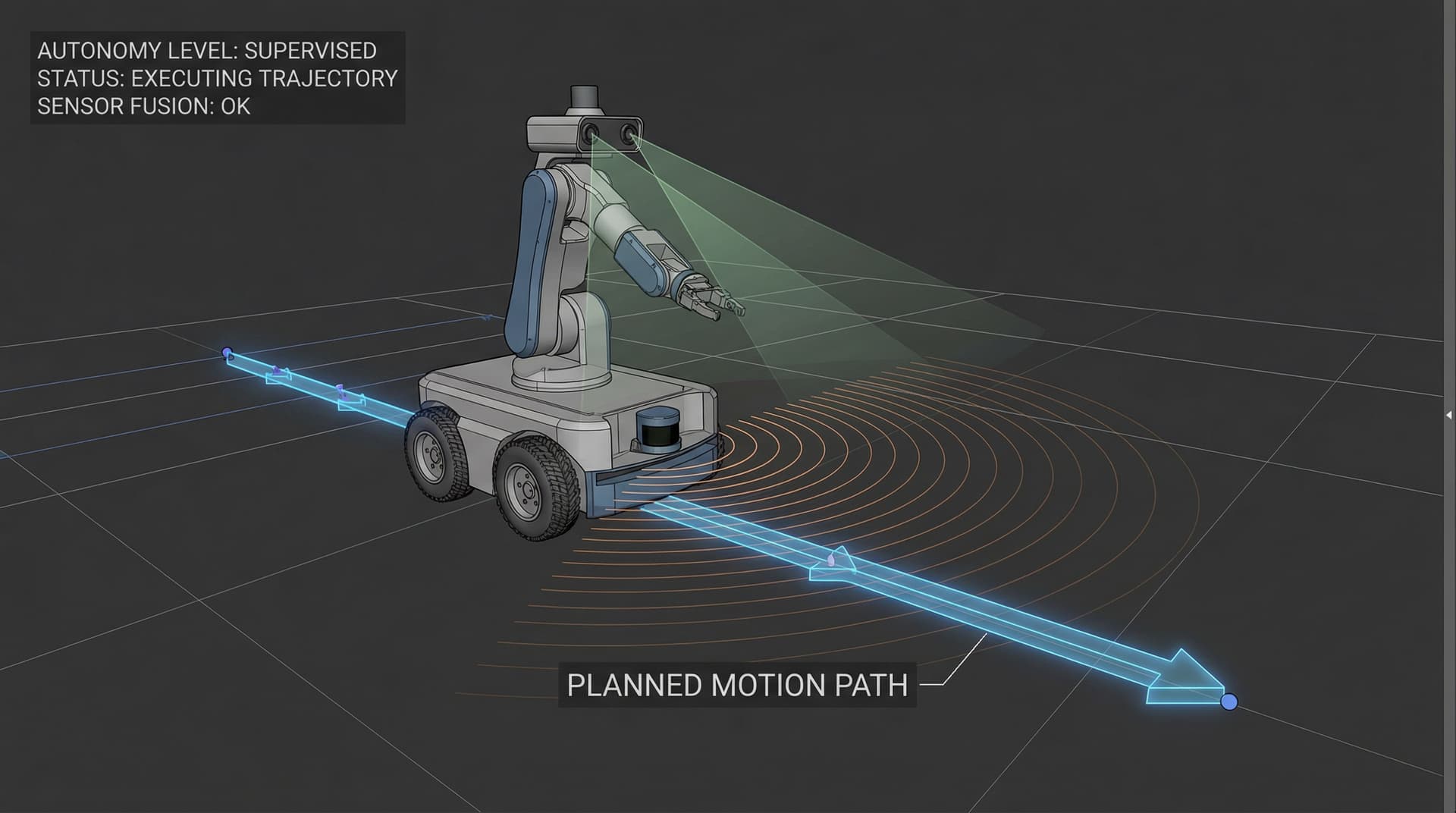
Vision-Guided Robotic Bin-Picking Cell with 3D Pose Estimation
How a YOLOv11-Seg + 3D-pose stack on a Jetson Orin Nano replaced fixed-pose jigs in a 6-DOF robotic cell — sub-80 ms latency, 99.2% accuracy, 40% throughput gain.
Continue exploring
Related blogs, services, and capability pages
Cross-links help readers move from proof into capability and educational content, and they reinforce the crawl path between commercial pages and reference content.
Similar Engineering Need?
Need help developing something similar?
Discuss your edge vision node deployment & telemetry architecture requirements, design challenges, or target specifications with our engineering team. NDA support is available where required.