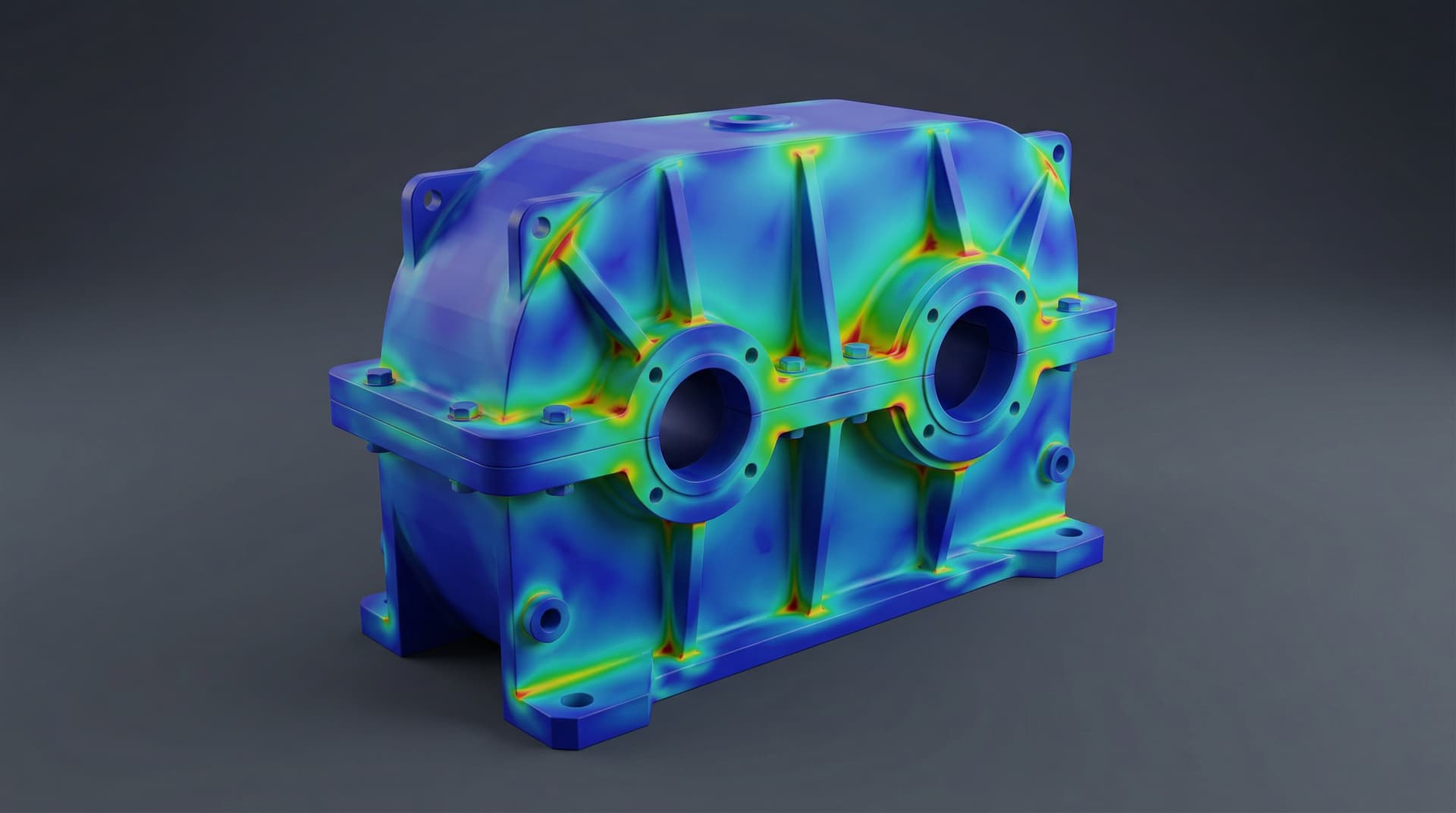
Robotics & AutomationEngineering Study
Visual Recognition Pipeline for Industrial Parts & Fasteners
An industrial distributor needed visual recognition across 6,200 SKUs without the cost of training a full vision model. We LoRA-tuned OpenCLIP on warehouse photos and shipped an 84 MB adapter that runs inference at production scale on commodity GPUs.
By YantriX Engineering · Computer Vision Team2 min readIndustrial distribution / wholesale
Overview
Engineering Scope & Context
Parameter-efficient fine-tuning of OpenCLIP ViT-L/14 with LoRA adapters on 18,000 SKU photos — 97.4% accuracy versus 78.1% zero-shot, 11 hours on a single RTX 4090.
Engagement: Engineering Study
Discipline: Robotics & Automation
Project Type: Model Tuning + Computer Vision
Application: Industrial distribution / wholesale
Key specifications
Core engineering parameters & stack.
- 97.4%
- Top-1 accuracy
- +19.3 pp
- Lift over zero-shot baseline
- 84 MB
- Adapter size (vs 1.7 GB full FT)
- 11 h
- Training on 1 × RTX 4090
- ₹1.4 L
- Total training cost
Objectives
What the project needed to achieve
- Hit ≥ 95% top-1 accuracy across 6,200 SKUs from warehouse photographs
- Keep training cost under ₹2 lakh end-to-end
- Ship an adapter small enough to deploy on commodity inference GPUs (T4, L4, RTX 4090)
- Make the fine-tuning pipeline reproducible so the client can extend it as the catalog grows
Challenge
Engineering constraint
The client needed visual SKU recognition for receiving, kitting, and stock-counting workflows but couldn’t justify the GPU budget for training a custom vision model from scratch (estimated ₹45 lakh on cloud compute alone for the dataset size). Off-the-shelf CLIP got them to 78.1% zero-shot accuracy across the 6,200 SKU catalog, which was useful but not deployable. They needed to close the gap to >95% while keeping training cost in the ₹1–2 lakh range.
Approach
How YantriX approached the work
- 01
Curated a labeled dataset of 18,000 warehouse photographs spanning the SKU catalog — mix of receiving-dock photos and existing product-listing images, with active-learning to focus labeling effort on SKUs CLIP zero-shot struggled with.
- 02
Applied LoRA adapters (r=16, alpha=32) to the OpenCLIP ViT-L/14 visual encoder, with the text encoder frozen — standard PEFT pattern for vision-language adaptation.
- 03
Trained on a single RTX 4090 with mixed-precision BF16 for 11 hours over 18 epochs, with cosine learning-rate schedule and a held-out test set per SKU class.
- 04
Compared against full fine-tuning (1.7 GB checkpoint, 4× the training time, 2× the GPU memory) and DoRA (slightly better accuracy at the same parameter count); shipped LoRA for its operational simplicity.
- 05
Built a serving setup using Predibase’s multi-adapter pattern so the same base CLIP model can serve multiple LoRA adapters (e.g. one per warehouse) on a single GPU without per-adapter deployment cost.
Outcomes
What improved by the end
- 97.4% top-1 accuracy across 6,200 SKUs (78.1% zero-shot baseline)
- Training cost ₹1.4 lakh end-to-end — ₹1.1 lakh on GPU rental + ₹0.3 lakh on data labeling
- Adapter size 84 MB versus 1.7 GB full fine-tune — ships over 4G in seconds
- 11 hours of single-GPU training versus 44 hours full FT
- Multi-adapter serving lets future warehouse-specific tuning ride on the same base GPU
Deliverables
What the client receives
- Trained LoRA adapter for OpenCLIP ViT-L/14
- Reproducible fine-tuning pipeline (Axolotl config + Weights & Biases run)
- Evaluation report comparing LoRA, DoRA, and full fine-tune
- Multi-adapter serving configuration on Predibase LoRAX-style infrastructure
- Data-curation playbook so the client can retrain as the catalog evolves
Tools used
Stack and tooling
- OpenCLIP ViT-L/14
- Hugging Face PEFT library for LoRA
- Axolotl for fine-tuning orchestration
- Weights & Biases for experiment tracking
- RTX 4090 (single GPU)
- Predibase LoRAX-style multi-adapter serving pattern
Impact
Business-level effect
- Stock-count workflow throughput up by ~3.4× vs. manual identification
- Receiving-dock mis-classification incidents down to a handful per month
- Pattern is now the client’s default for vision-model adaptation across other use cases
Conclusion
Full fine-tuning is overkill for most domain-adaptation problems in 2026. LoRA, QLoRA, and DoRA hit the same quality bar at 5–10% of the cost — the right default for production vision-language tuning.
Working on a similar engineering problem?
Have an industrial sorting or inventory verification challenge? Reach out to explore practical computer vision and perception options.
Tagged
- Computer Vision
- Part Recognition
- Warehouse Automation
- OpenCLIP
- Inspection
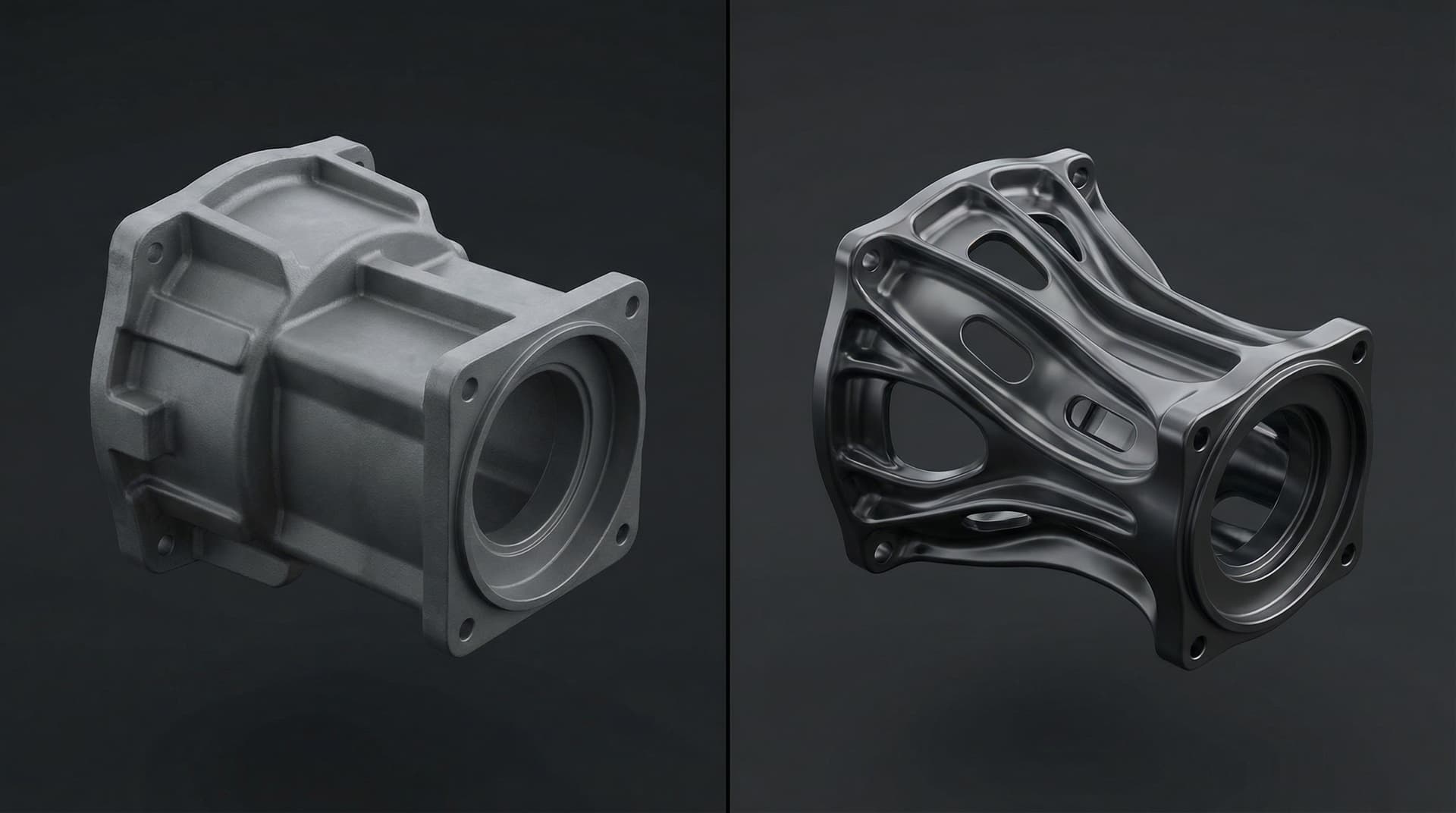
Visual results
Key views and intermediate artefacts
Adapter-vs-full-FT size
Frequently asked questions
Answers from the engagement itself.
Why use fine-tuned vision models over standard barcode/QR systems?
In high-mix industrial supply chains, many raw castings, fasteners, and machined components lack barcodes or have damaged labels. Optical recognition identifies parts directly from their physical geometry and surface markings.
What lighting and camera considerations matter for component recognition?
Diffused illumination is critical to avoid specular reflections off metallic or oily machined surfaces. Standard industrial GigE or USB3 cameras with polarized filters provide consistent contrast across varying plant lighting conditions.
Can these models run on localized edge devices on the factory floor?
Yes. Lightweight adapter checkpoints run comfortably on local workstations or embedded edge GPUs (like NVIDIA Jetson Orin), providing sub-100ms classification latency without sending proprietary imagery to cloud servers.
Related case studies
Adjacent proof you can read next.
MLOps · Edge AI Fleet
Edge Vision Node Deployment & Telemetry Architecture
End-to-end MLOps platform managing 600 Jetson inspection cameras across 14 sites — median model deploy went from 9 days to 38 minutes, with automatic drift-triggered rollback.
Robotics · Autonomous Mobile Robot (AMR)
Autonomous Mobile Robot (AMR) Platform Development with Nav2 & LiDAR SLAM
End-to-end development of an 80 kg payload industrial AMR — custom skid-steer chassis, Nav2 autonomous navigation, LiDAR SLAM, and ESP32 motor controller integration in 16 weeks.
Continue exploring
Related blogs, services, and capability pages
Cross-links help readers move from proof into capability and educational content, and they reinforce the crawl path between commercial pages and reference content.
Similar Engineering Need?
Need help developing something similar?
Discuss your visual recognition pipeline for industrial parts & fasteners requirements, design challenges, or target specifications with our engineering team. NDA support is available where required.