Mechanical & CADTechnical Exploration
Engineering Retrieval System for CAD & Technical Documentation
An industrial manufacturer needed engineers to find answers across decades of datasheets, GD&T drawings, and internal standards without spending half an hour per question. We built a production RAG system with hybrid search, reranking, and grounded-citation answers — deployed behind their SSO.
By YantriX Engineering · Engineering Studio3 min readIndustrial manufacturing
Overview
Engineering Scope & Context
How a hybrid-search RAG system over 40k engineering PDFs and CAD drawings cut average engineer-question turnaround from 35 minutes to 22 seconds, with grounded citations on every answer.
Engagement: Technical Exploration
Discipline: Mechanical & CAD
Project Type: GenAI Application + RAG
Application: Industrial manufacturing
Key specifications
Core engineering parameters & stack.
- 95×
- Faster than manual search
- 22 s
- Average answer time
- 0.93
- RAGAS faithfulness score
- 40k
- Documents indexed
- 88%
- Inference-cost reduction post-FT
Objectives
What the project needed to achieve
- Answer engineering questions with grounded citations to the exact source paragraph
- Handle the mixed-modality corpus (PDFs, scanned drawings, spreadsheets, internal wiki)
- Cut average question-to-answer time from ~35 minutes to under 30 seconds
- Deploy behind SSO with role-based access so engineering data stays governed
- Hit a faithfulness score ≥ 0.90 on the client’s held-out evaluation set
Challenge
Engineering constraint
The client’s 200+ engineers spent significant time searching across a 40,000-document corpus — PDF datasheets, scanned GD&T drawings, internal design standards, ECN history, and supplier specs. Off-the-shelf enterprise search returned files; engineers actually wanted answers, with the source paragraph cited. The team had tried a vanilla RAG pilot that retrieved well but hallucinated citations, eroding trust within two weeks. They needed a production-grade system that survived the 40–60% RAG production-failure rate.
Approach
How YantriX approached the work
- 01
Built an ingestion pipeline that parses PDFs (PyMuPDF + Unstructured), runs OCR on scanned GD&T drawings (PaddleOCR with table reconstruction), and chunks documents semantically rather than by fixed length.
- 02
Set up hybrid retrieval combining BM25 (Elasticsearch) and dense embeddings (bge-large-en-v1.5 in a Qdrant collection), with a Cohere Rerank-v3 cross-encoder reranking the top 40 hits to the top 8.
- 03
Layered an agentic query-decomposition step — GPT-4o (later switched to a fine-tuned Llama 3 70B) decomposes multi-hop questions into sub-queries, retrieves for each, and synthesizes with explicit per-paragraph citations.
- 04
Built a RAGAS-based evaluation harness with 240 question-answer pairs from the client’s domain experts; iterated retrieval, reranker, and prompt design until faithfulness and answer-relevancy both crossed 0.90.
- 05
Deployed behind the client’s SSO with role-based ACLs on the corpus so each engineer sees only documents they’re cleared for.
Outcomes
What improved by the end
- Average answer time: 22 seconds versus 35 minutes baseline — ~95× faster
- RAGAS faithfulness 0.93, answer-relevancy 0.91 on held-out evaluation set
- Source-cited every answer — trust restored within 6 weeks of pilot
- Hosted on the client’s own infrastructure with role-scoped access controls
- Switched from GPT-4o to fine-tuned Llama 3 70B at month 5 to cut inference cost ~88%
Deliverables
What the client receives
- Ingestion pipeline with PDF + OCR + table reconstruction
- Hybrid retrieval stack (BM25 + dense + reranker) with documented tuning
- Agentic query-decomposition + grounded-citation generation
- RAGAS evaluation harness with the client’s 240-pair domain benchmark
- Fine-tuned Llama 3 70B adapter + vLLM serving configuration
- SSO integration and role-based corpus ACL
- Monitoring dashboard tracking retrieval recall@k, faithfulness drift, latency, cost-per-query
Tools used
Stack and tooling
- LangChain + LlamaIndex for orchestration
- Qdrant for the vector index, Elasticsearch for BM25
- bge-large-en-v1.5 embeddings + Cohere Rerank-v3
- GPT-4o then Llama 3 70B (fine-tuned, self-hosted on vLLM)
- RAGAS for evaluation
- PyMuPDF, Unstructured, PaddleOCR for ingestion
- FastAPI backend behind the client’s SSO
Impact
Business-level effect
- Engineering team time freed equivalent to ~6 FTE per quarter
- Decisions across the team converged faster because they referenced the same cited paragraphs
- Documentation gaps surfaced — the team is now backfilling standards the RAG couldn’t answer
Conclusion
Production RAG is mostly about the ingestion pipeline, the retrieval stack, and the evaluation harness. The model picks itself once those three are right. We use the same architecture template across knowledge-base RAG engagements; only the corpus and the eval set change.
Working on a similar engineering problem?
Have questions about organizing and indexing engineering documentation? Reach out to discuss practical technical data workflows.
Tagged
- Technical Documentation
- Search
- Engineering Data
- Knowledge Retrieval
Visual results
Key views and intermediate artefacts
Grounded-citation answer view
Frequently asked questions
Answers from the engagement itself.
Why do standard search tools struggle with engineering documents?
Engineering corpora mix tabular datasheets, scanned GD&T drawings, and technical standards. Pure keyword search misses semantic context, while basic vector search struggles with exact alphanumeric part numbers. Combining lexical and dense retrieval with cross-encoder reranking yields significantly higher precision.
Hybrid search or pure semantic search — which is right for engineering documents?
Hybrid almost always wins. Engineering questions mix proper-noun part numbers (where BM25 dominates) with conceptual queries (where dense embeddings dominate). Running both and reranking with a cross-encoder typically picks up 8–15 percentage points of recall@10 over either alone.
How do you handle scanned GD&T drawings and tables?
Standard OCR tools often lose table hierarchy and geometric symbols. High-precision document pipelines use specialized layout analysis models combined with OCR to reconstruct table rows and cell boundaries before indexing text blocks.
Related case studies
Adjacent proof you can read next.
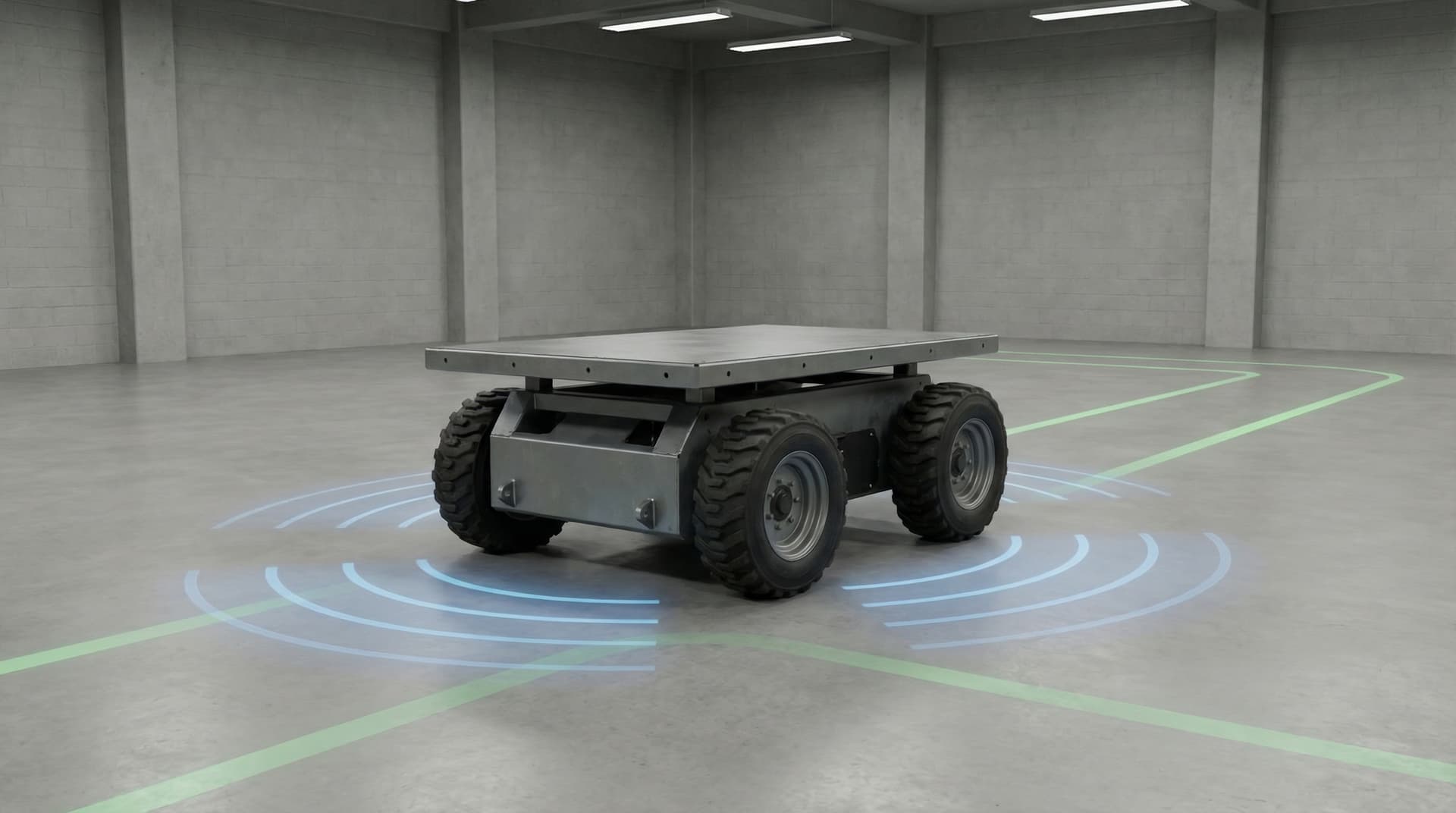
Robotics · Autonomous Mobile Robot (AMR)
Autonomous Mobile Robot (AMR) Platform Development with Nav2 & LiDAR SLAM
End-to-end development of an 80 kg payload industrial AMR — custom skid-steer chassis, Nav2 autonomous navigation, LiDAR SLAM, and ESP32 motor controller integration in 16 weeks.
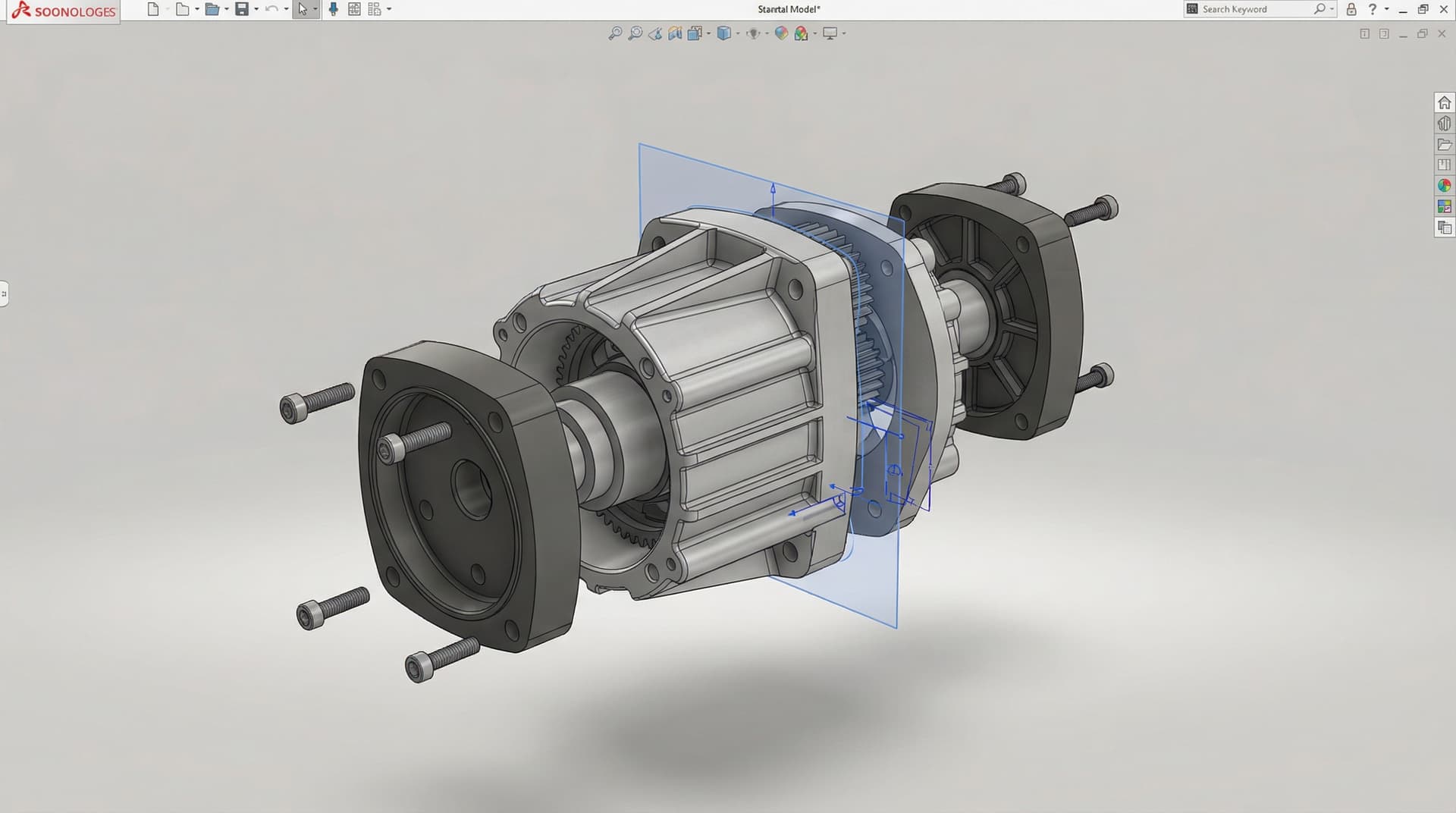
CAD Design · Mechanical & DFM
DFM Architecture & Injection Mold Optimization for IP67 IoT Enclosure
Complete CAD design and DFM optimization for a multi-part outdoor IoT enclosure in polycarbonate — 1.5° uniform draft, overmolded silicone gasket, and moldflow sink-mark elimination.
Continue exploring
Related blogs, services, and capability pages
Cross-links help readers move from proof into capability and educational content, and they reinforce the crawl path between commercial pages and reference content.
Similar Engineering Need?
Need help developing something similar?
Discuss your engineering retrieval system for cad & technical documentation requirements, design challenges, or target specifications with our engineering team. NDA support is available where required.